In his popular 2009 book, “The Primal Blueprint,” Mark Sisson wrote about common misconceptions, or what he called, ‘Conventional Wisdom.’ There are literally hundreds of common health misconceptions of various levels of ignorance. Many of them have been repeated and published over the years by people who make money off of these claims (e.g., Big Pharma; Big Food). Here is our list contradicting the ten most important common health misconceptions. As always, the following list and explanation is based on our personal beliefs and not intended to treat, diagnose, or prescribe any disease, condition, or illness.
- Too much sun is better than not enough sun.
- Too much cholesterol is better than not enough cholesterol.
- Too much vitamin D is better than not enough vitamin D.
- Too much fat is better than not enough fat.
- Too much protein is better than not enough protein.
- Too many eggs is better than not enough eggs.
- Too much red meat is better than not enough red meat.
- Too much salt is better than not enough salt.
- Too much CO2 is better than not enough CO2.
- Too much Journey Juice is far better than not enough Journey Juice!
Did you know that construction workers in the U.S. have a lower incidence of cancer than the general population? It is thought the reason may be their higher levels of vitamin D, because they spend more time outside than the general population. The first three common misconception are related. We’ve all been warned about ‘too much sun’ and ‘too much cholesterol,’ so that more than 42 percent of adults, and more than 50 percent of children are vitamin D deficient. (NIH 2015) When mothers slather SPF 80 sunscreen on their children at the beach in the summer, they do not realize they are making them vitamin D deficient. And no, that sugar-filled cereal and skim milk are not giving the kids vitamin D.
Do you know how vitamin D is manufactured? Your body uses the sun’s ultraviolet (UVB) rays to react with the cholesterol in your skin to activate the production of vitamin D, which is a precursor hormone that plays a vital role in hundreds of bodily functions including immune, cardiovascular, endocrine and metabolic. (NIH 2021) Of course, taking statins lowers total cholesterol, which is a vital compound found in every cell in the body. People with the lowest cholesterol have higher all-cause mortality rates than people with the highest cholesterol. (Journal of Clin. Med. 10-1-19)
The next four items on the list are also connected. Eating healthy fat and protein from grass-fed, properly raised animals – especially eggs and red meat – is the healthiest diet known to man. Eating good fats will not make you fat! (‘Eat Fat Lose Fat,’ 2004)
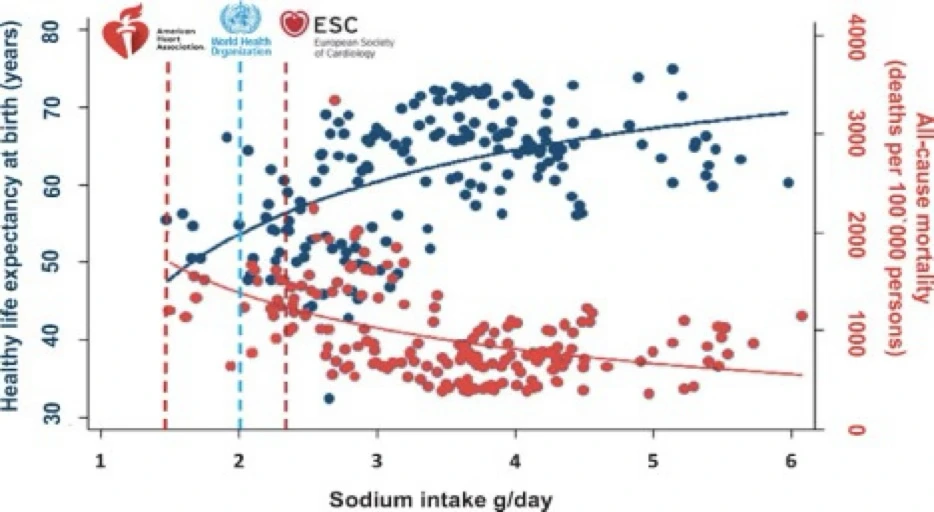
Salt. The word salary comes from the Latin word for salt, sal. In ancient Rome, soldiers were sometimes paid in salt, because it was highly valued for its health benefits and its ability to preserve meat and fish. It was called salarium. (NPR, 11-8-14) Avoiding too much salt is one of the oldest health misconceptions around. Remember, salt makes up about .4% of our body’s weight, about the same as the ocean – from whence we came. (BBC Jan. 2024) Too little salt is definitely more dangerous than too much.
Carbon Dioxide (CO2) is not a poisonous gas. Without it we would not have plants. No plants equals no animals; No animals equals no meat; No plants & animals equals no humans. Fun fact: Navy submariners spend months at sea breathing air that is 3000 parts per million (PPM) of CO2. Earth’s atmosphere is 400-500 PPM. (NIH 6-1-2018)
It is very hard to consume eight servings of raw fruits and vegetables each day. But it’s very easy to drink them. Just drink one 16 oz bottle of Journey Juice daily. As Amy always says, ‘It will make your cells dance!’